Case study · Historic homes
An 1850 home,
lit the way it deserved.
How we lit a historic property without disturbing the original brick and concrete that make it what it is.
The property
Hidden after sundown
for over a century.
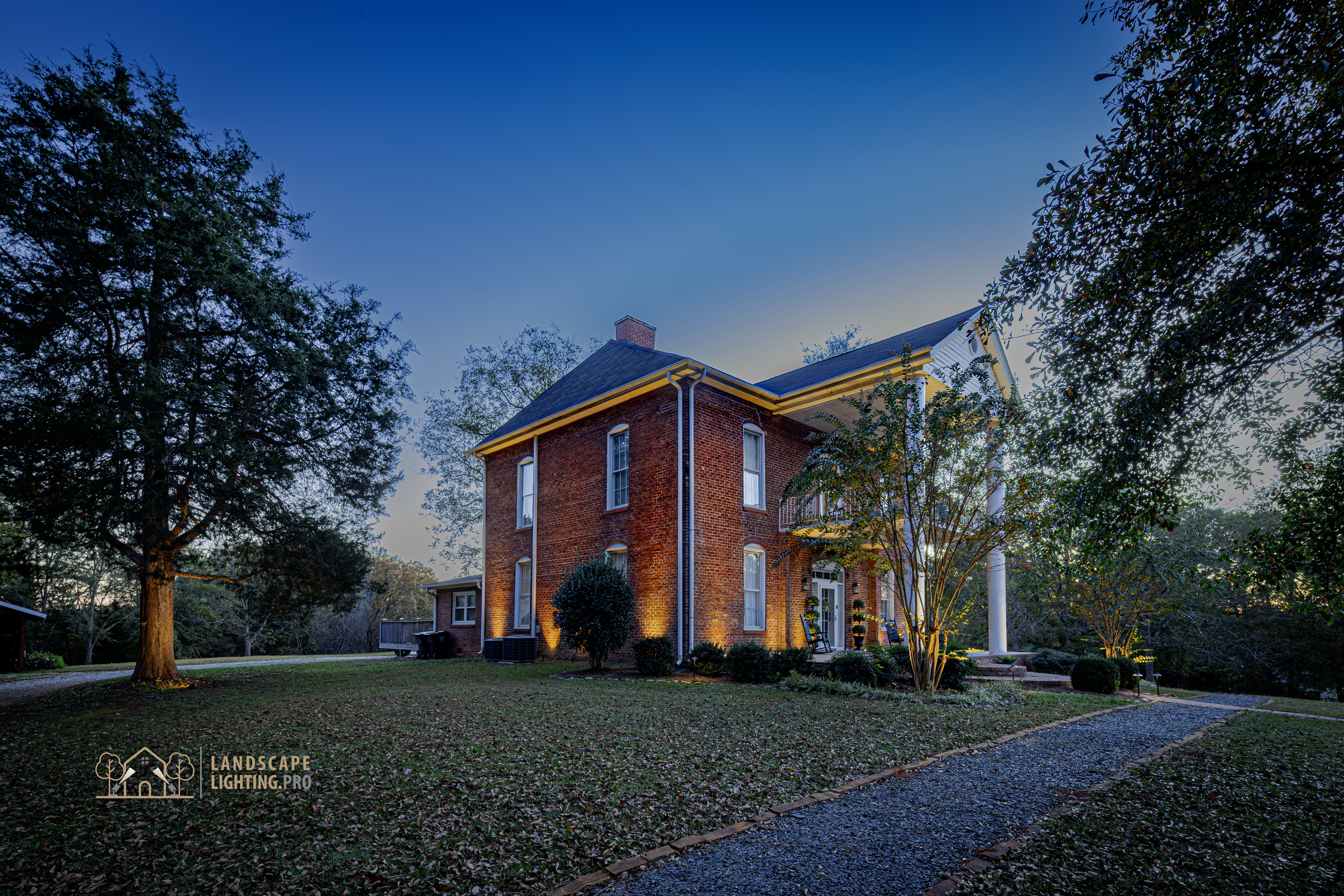
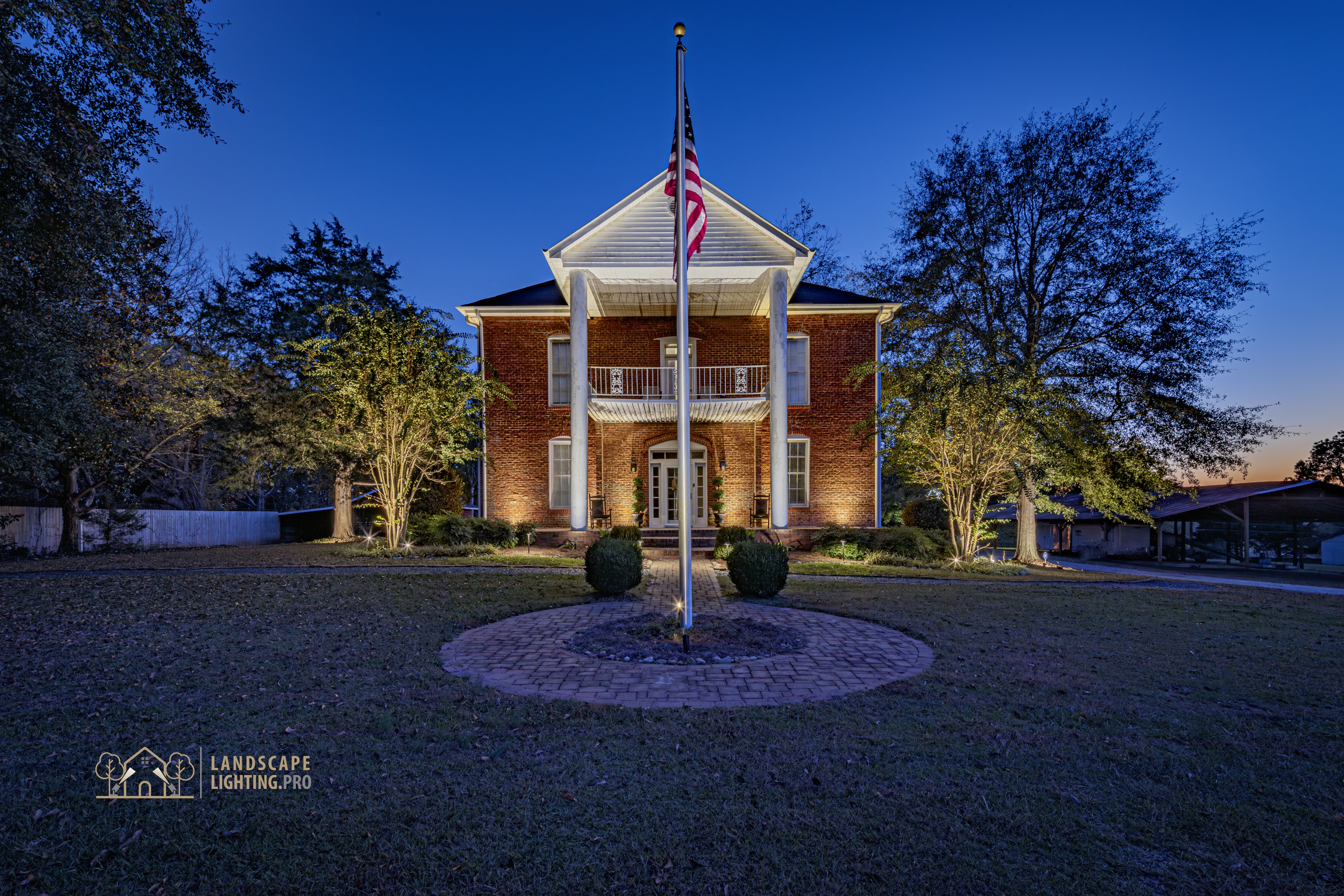
Perched on a hill in Atlanta, a brick home built in 1850 had stood for more than a century in near-darkness after sundown. The columns, the balconies, the depth of the brick, all disappeared into the night.
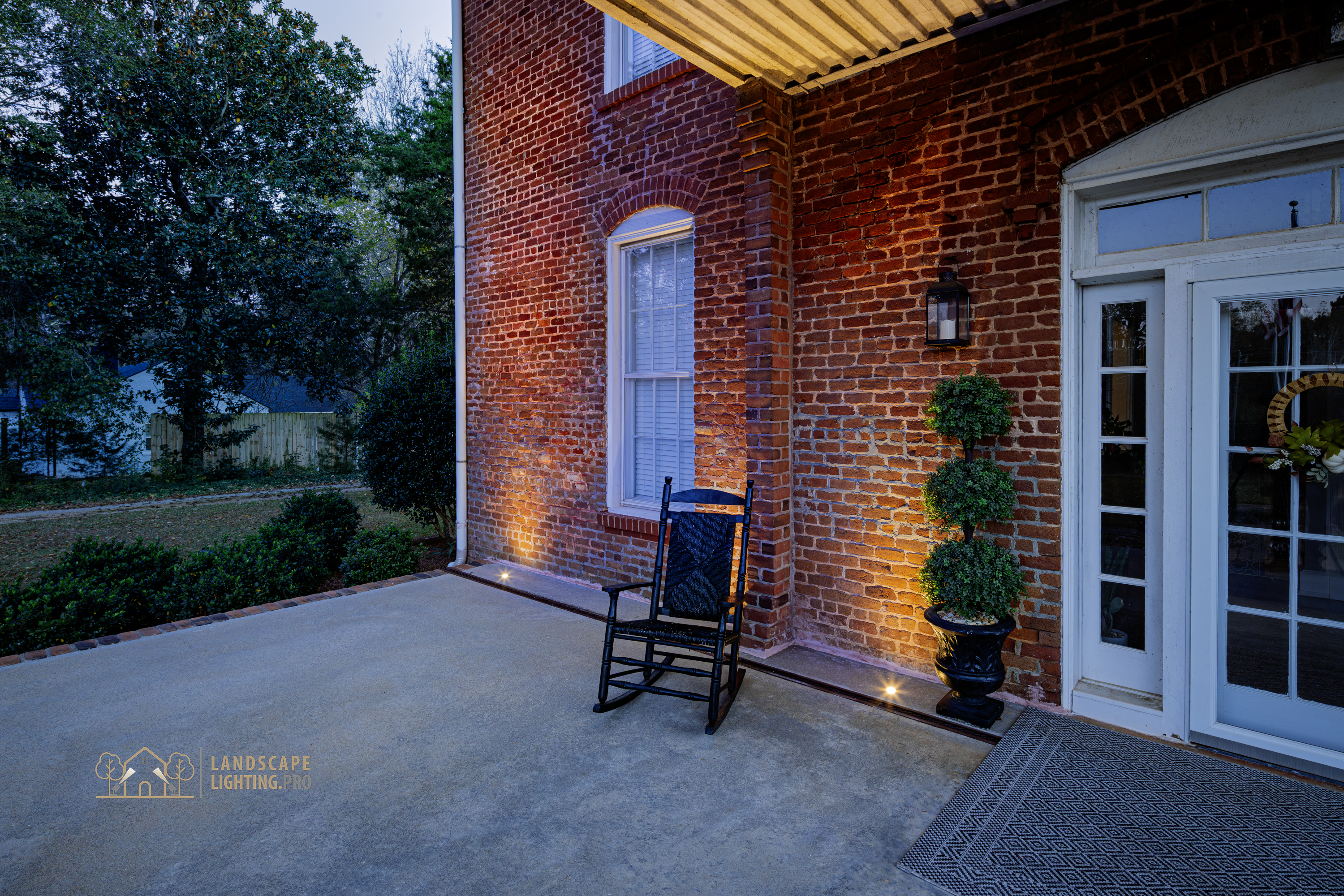
The challenge wasn't just to light the house. It was to light it without disturbing the original concrete approach to the front entrance, which is historic in its own right.
The decision
Embedded, not staked.
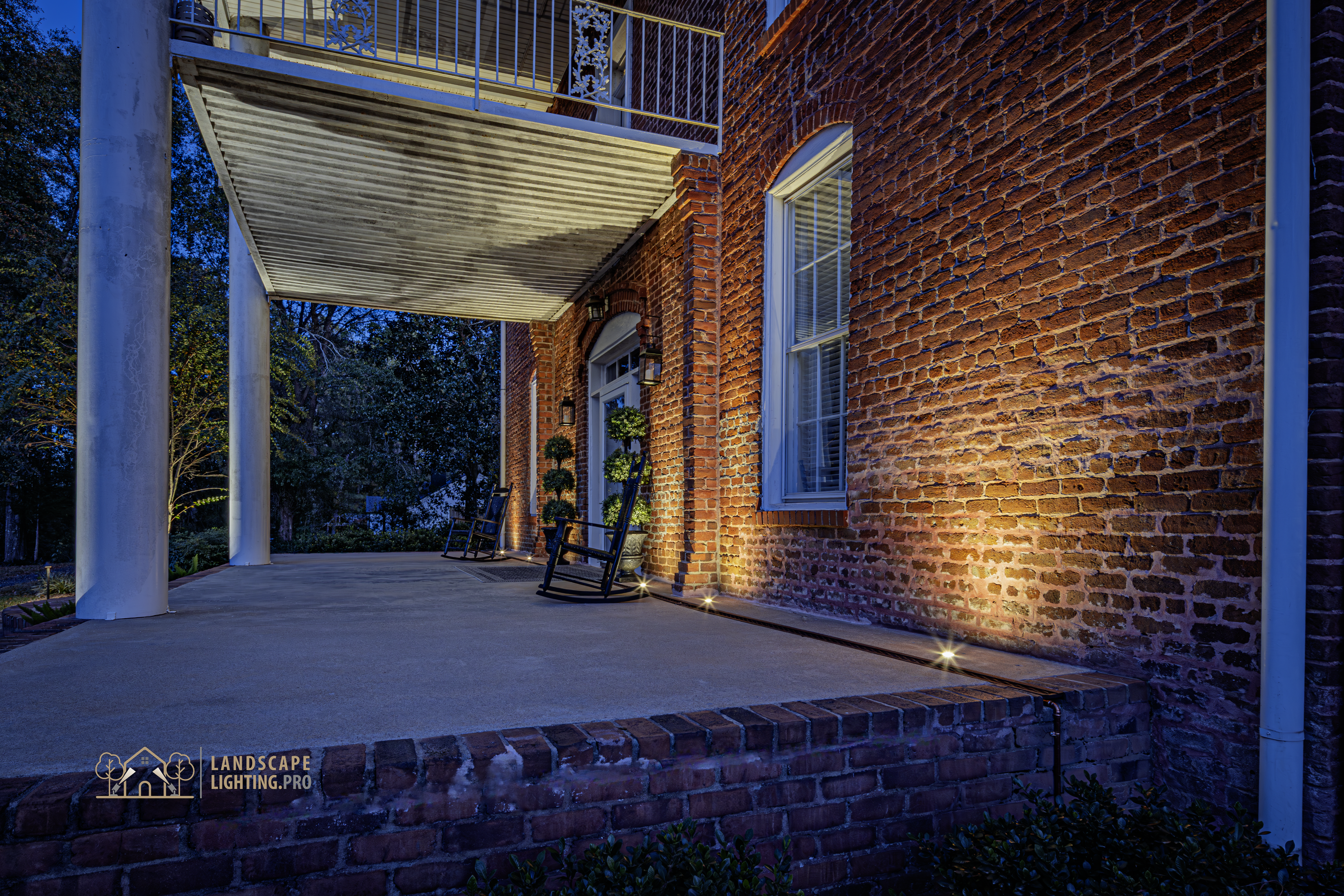
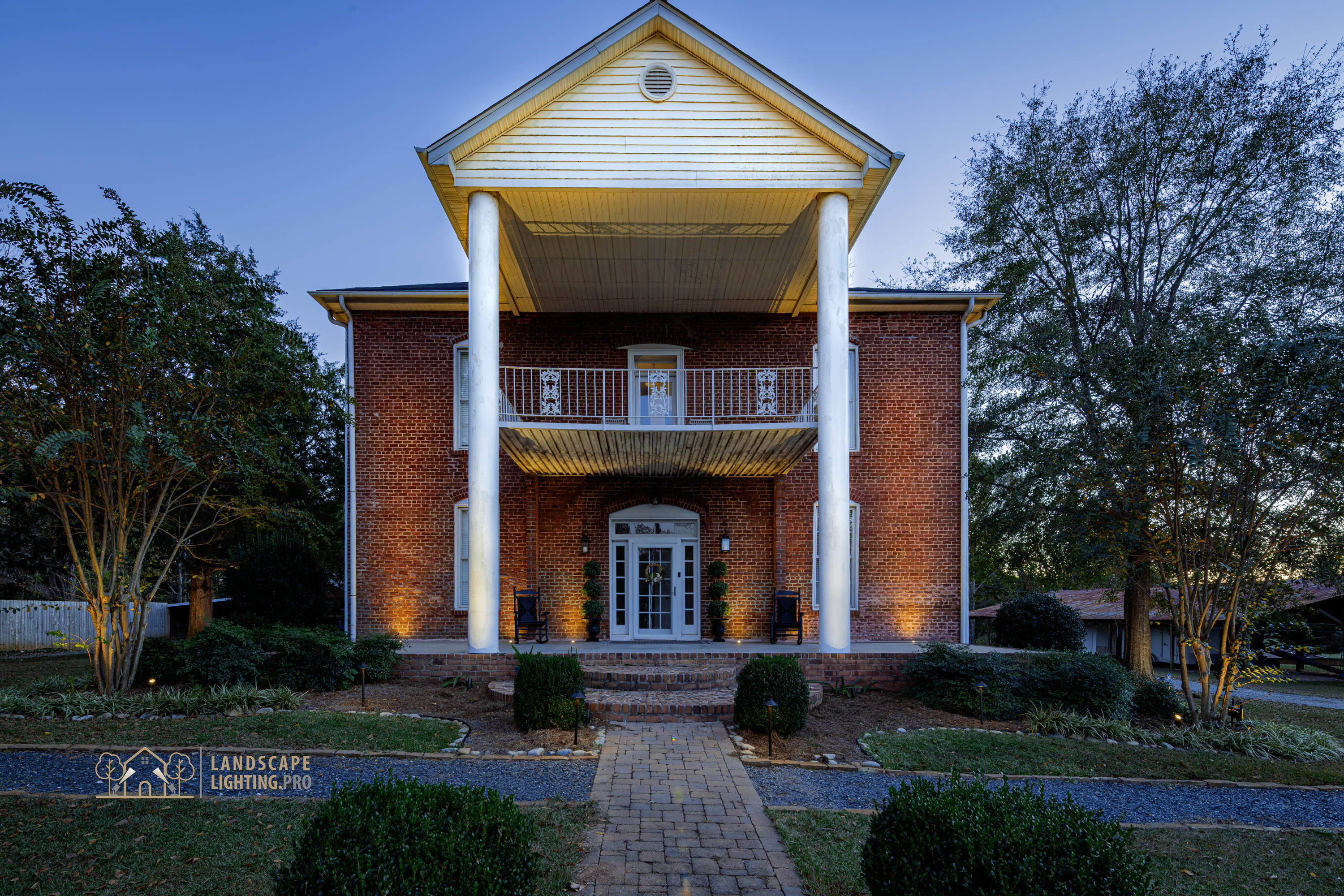
We set the path-side fixtures directly into the concrete. Surface-mounted fixtures would have read as additions, the kind of lights you notice instead of the home you're meant to see. Embedding meant cutting precisely into the historic concrete and routing the wire below grade. The fixtures sit flush in daylight and disappear once they are lit.
The transformation
The architecture
comes forward.
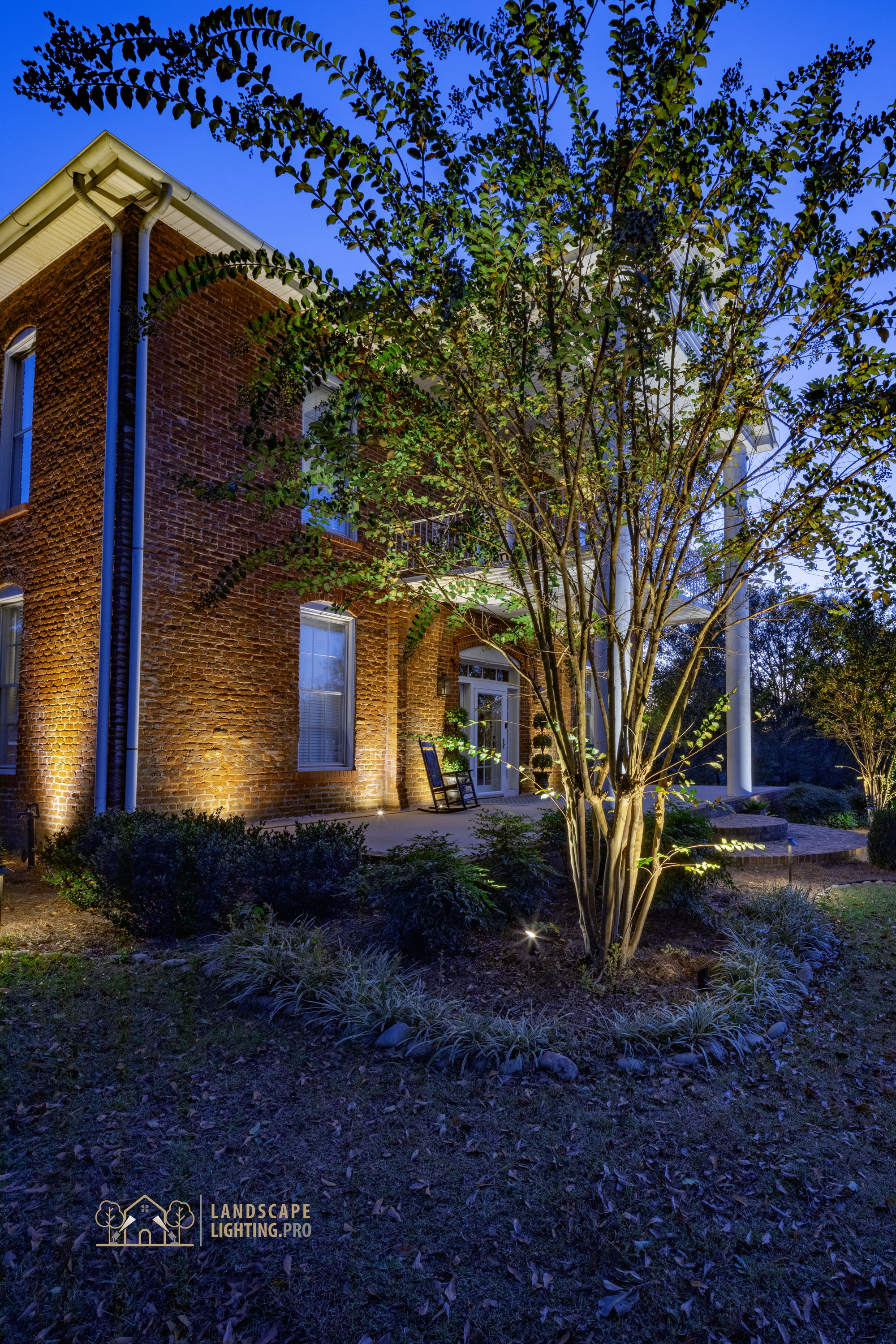
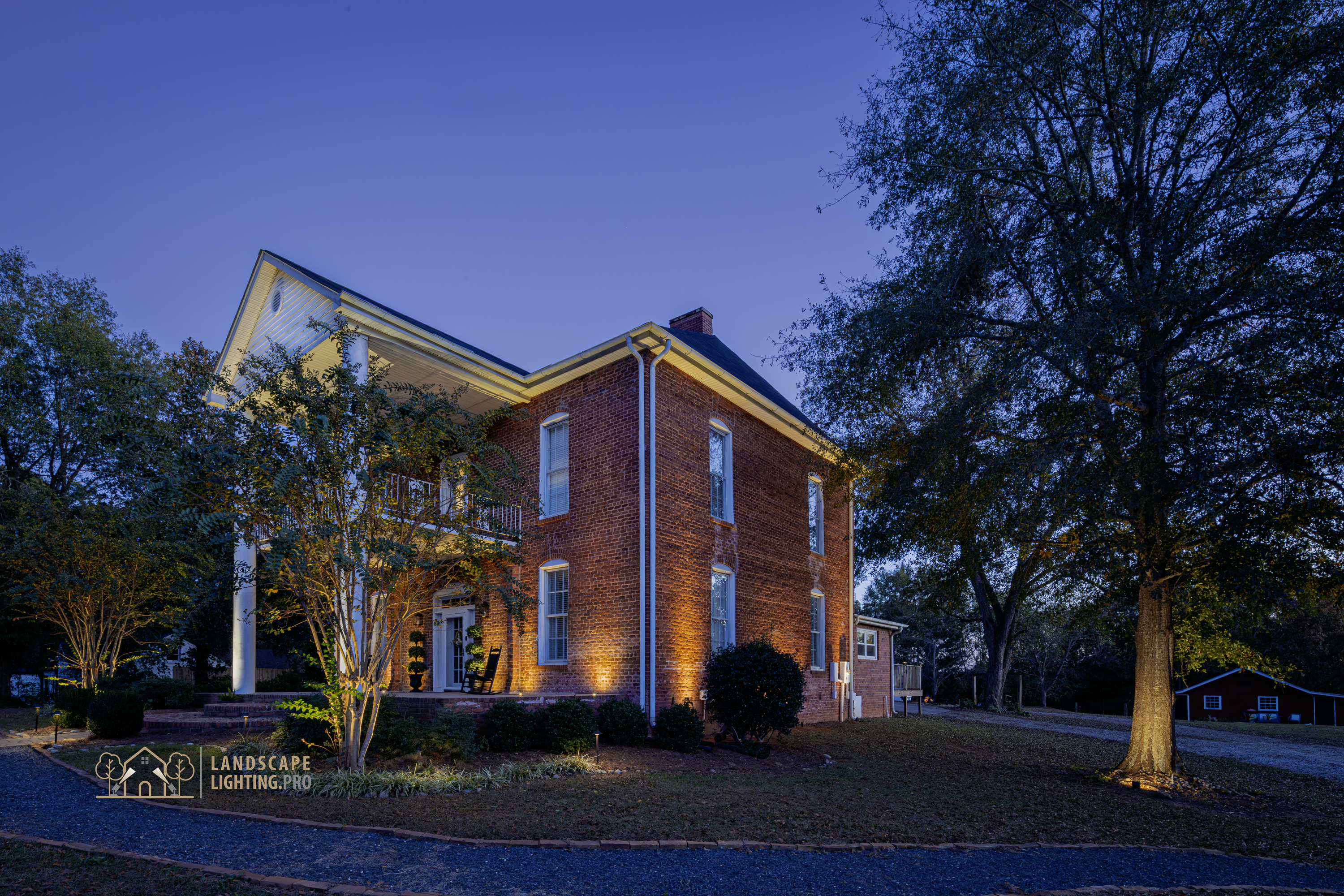
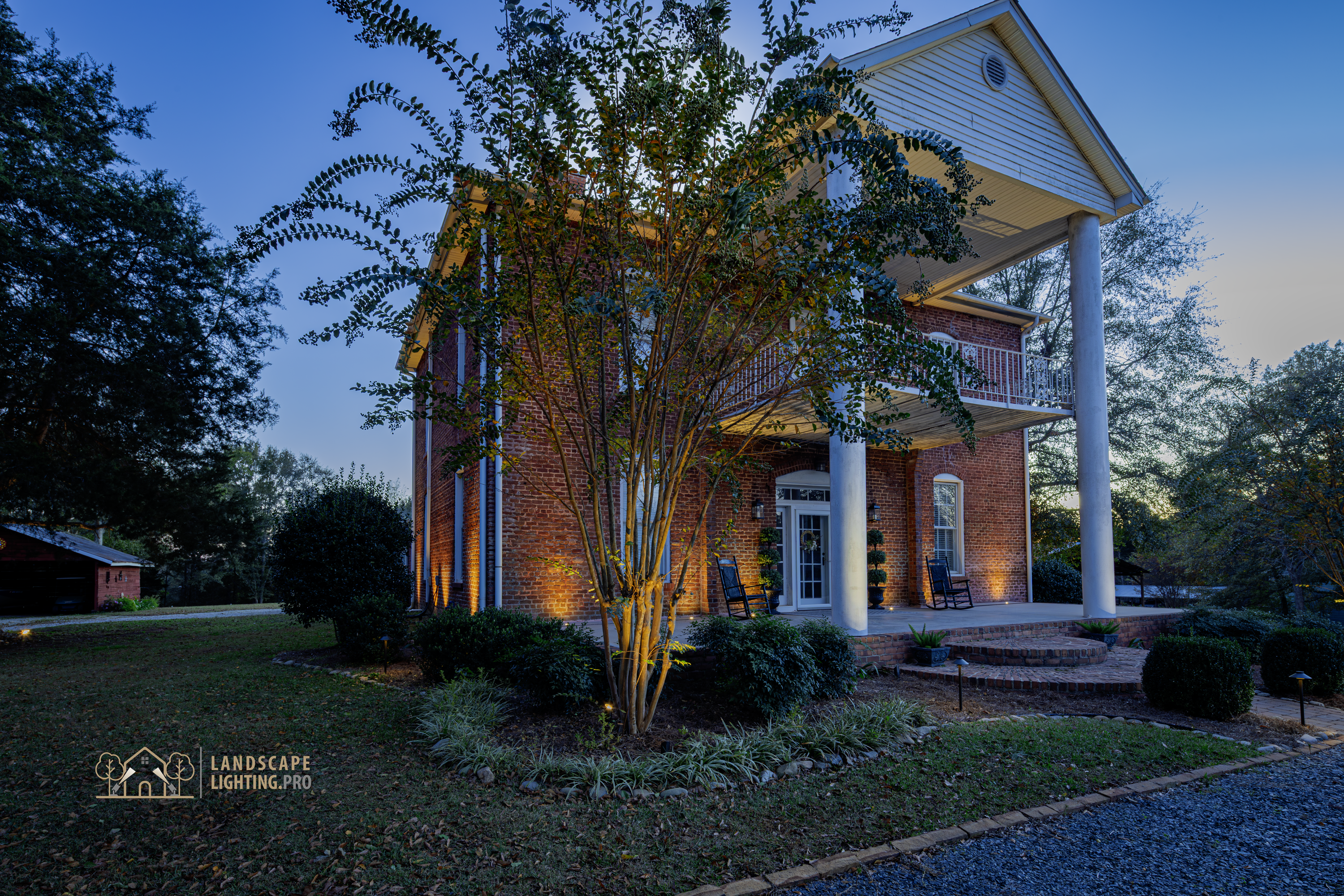
Warm light against the red brick brought the columns and the deep frieze along the eaves into relief. The texture of the brick took on more depth than it ever shows in daylight.
The walk
Illuminated pathways.
Path lights line the walks at grade so guests see the way to the entrance, not the fixtures lighting it. Soft pools at every step, enough to feel sure-footed, never enough to feel staged.
The trees
Part of the same composition.
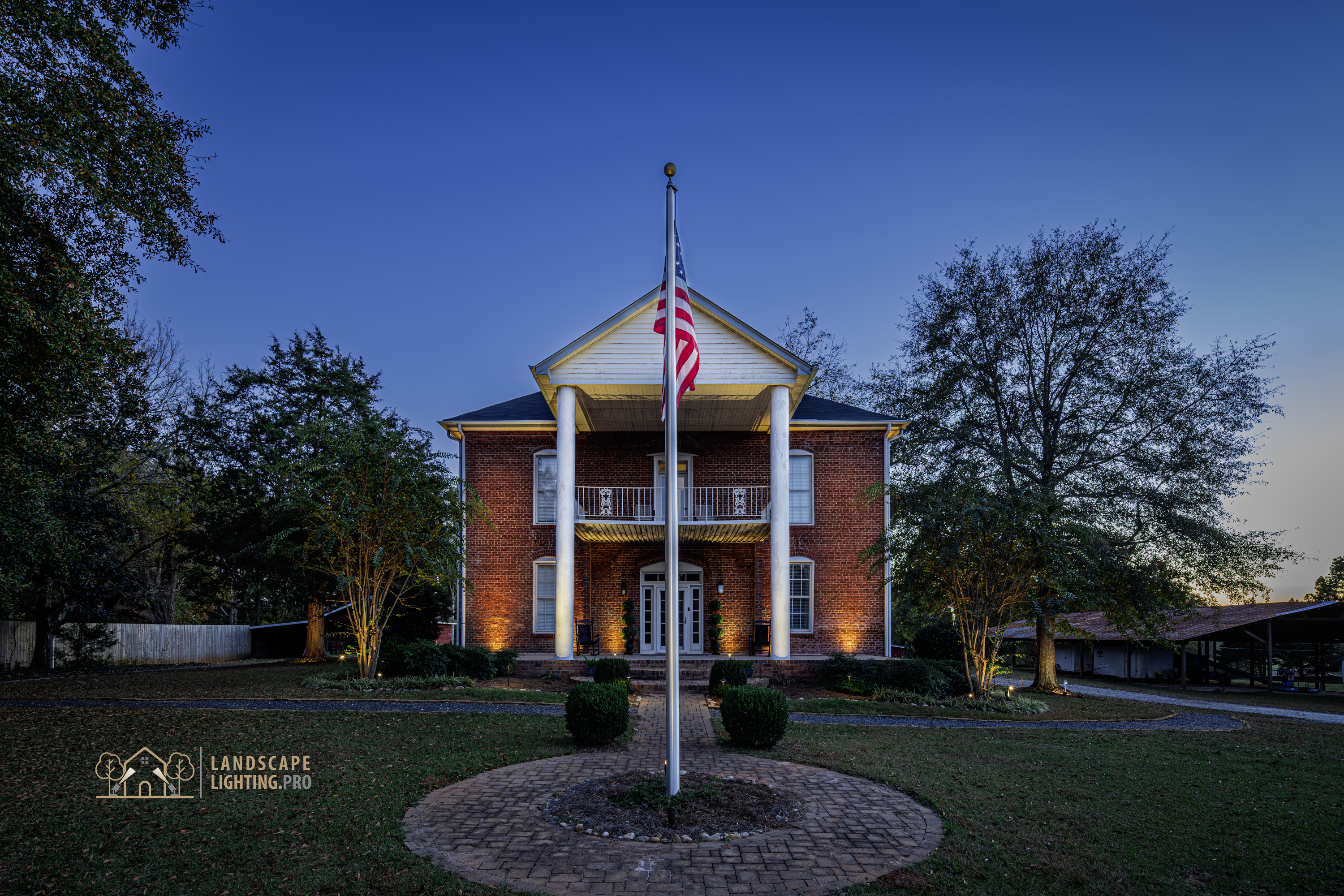
Low-output uplights at the bases. In-canopy fixtures placed where the moon would naturally throw light. The landscape now reads as part of the same composition as the home, not a backdrop to it.
The result
What was a silhouette
is now the strongest version
of the home it has always been.
The brick reads as brick. The columns read as columns. The frieze reads as the frieze. Nothing was added that the house didn't ask for, and the original concrete approach is still original.
Have a historic home?
Lighting designed for the home, not added to it.
If your property has architectural detail worth preserving, the lighting plan should be drawn around it. Reach out and we'll walk you through how.